Full spectrum LED grow lights combine white, red, blue, and far-red diodes to approximate the color range of natural daylight, supporting photosynthesis across every stage of plant growth. They're now the default choice for most indoor growers — but "full spectrum" doesn't mean "just like the sun," and knowing the difference will save you money and a disappointing harvest.
This guide breaks down what full spectrum actually means, where these lights help, where they fall short, and how to pick a wattage that matches your tent.
What Does "Full Spectrum" Actually Mean?
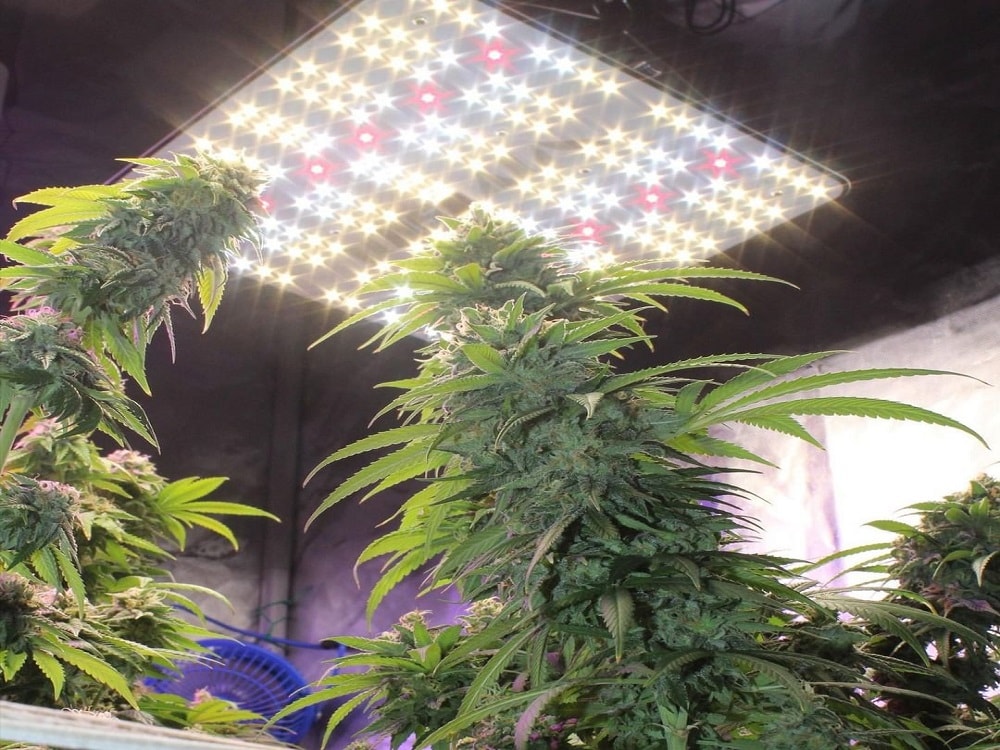
A full spectrum LED grow light emits light across a broad range of wavelengths — typically blending 3000K warm white and 5000K cool white diodes with targeted red (around 660nm) and far-red (around 730–750nm) wavelengths. The goal is to mimic the balanced color temperature of daylight rather than the narrow pink or purple glow of older single-band LEDs.
The term has roots in the commercial lighting industry, where a light earns a "full spectrum" label once its Color Rendering Index (CRI) climbs above 90 — the point at which colors under the light start looking the way they do in natural daylight. That standard made its way into horticultural lighting, though marketing claims that these lights are "just like the sun" oversimplify what's actually happening (more on that below).
Why Growers Are Switching to Full Spectrum
Better Yields, Not Just Healthy-Looking Plants
Older narrow-spectrum LEDs can keep plants alive without giving them what they need to actually produce well. Plants under those lights often look fine but underperform at harvest because the spectrum skips wavelengths that drive flowering and fruiting.
Fewer Fixtures, Lower Cost
A full spectrum light covers more of a plant's needs in a single fixture, so growers typically need fewer lights — and a smaller electric bill — than running multiple single-band setups for different growth stages.
One Fixture, Every Growth Stage
Because full spectrum lights supply blue-heavy light for vegetative growth and red/far-red-heavy light for flowering, you don't need to swap fixtures between seedling, veg, and bloom.
Light Intensity Still Comes First
Spectrum matters, but PPFD (Photosynthetic Photon Flux Density) — how much usable light actually reaches the canopy — is the first thing to check when comparing fixtures. A full spectrum light with weak output won't outperform a narrower-spectrum light with strong PPFD.
Where Full Spectrum LED Grow Lights Fall Short
Full spectrum lighting is a real improvement over old single-band LEDs, but it isn't a perfect stand-in for the sun. Three limitations are worth knowing before you buy.
1. One Spectrum Can't Be Optimized for Every Plant
Different crops respond best to different light recipes. A full spectrum fixture covers the needs of most plants reasonably well, but it can't be custom-tuned the way a dedicated single-crop setup can.
Not every wavelength a full spectrum light emits actually drives photosynthesis — only radiation in the 400–700nm range counts as Photosynthetically Active Radiation (PAR), and plants respond to that range specifically, not to how bright a fixture looks to the human eye.
This is exactly why VIVOSUN's tunable-spectrum AeroLight series exists: it lets growers shift the red-to-blue ratio through an app instead of locking in one fixed recipe for the entire grow.
2. Full Spectrum Doesn't Mean the Full Solar Spectrum
Marketing copy often implies these lights replicate sunlight's spectral distribution closely enough to guarantee sun-level growth.
In reality, sunlight includes far more than the visible or PAR range — UV, infrared, x-rays, and radio waves are all part of it, and researchers are still studying exactly how each band affects plant development.
That said, PAR isn't the only wavelength range that matters:
- UV exposure can trigger protective compounds in plants (similar to how skin tans under UV).
- Infrared light can push plants into an avoidance response that speeds up flowering.
VIVOSUN's AW-series AeroLight Wing fixtures address this directly by adding enhanced UV output for the late flowering stage.
3. Full Spectrum Lights Don't Change Throughout the Day Like the Sun Does
Outdoors, the sun's spectrum shifts constantly with weather and its angle in the sky, and plants have evolved to respond to that constant flux.
Hang a full spectrum grow light in an outdoor greenhouse and you'll still get some of that natural variability.
Indoors, a fixture holds a fixed spectrum the whole session — which is fine, since photosynthesis itself only requires the 400–700nm range regardless of whether the light source changes throughout the day.
What matters more indoors is matching the fixture's output to your plant's actual growth stage, not chasing a dynamic spectrum you don't need.
How to Choose a Full Spectrum LED Grow Light
Match wattage and coverage to your tent size first, then decide whether you need standalone smart controls.
| Tent Size | Recommended Wattage | VIVOSUN Series |
|---|---|---|
| 2×2 ft | 100W | AeroLight A100 / LumaLight 100W |
| 3×3 ft | 150–200W | AeroLight A150SE, AW200 / LumaLight 150W–200W |
| 4×4 ft | 320–400W | AeroLight AW400 / LumaLight 320W–400W |
| 5×5 ft | 500–750W | LumaLight 500W–750W |
AeroLight Series
Built for small to mid-size tents (2×2 through 5×5), with an integrated circulation fan that pushes airflow directly into the canopy.
The A-series mounts the driver on top of the panel for a simple plug-and-play setup; the step-up AW Wing series (200W and 400W) uses a remote driver, adds tunable spectrum control, and — on the SE models — enhanced UV for late-flower stress response.
LumaLight Series
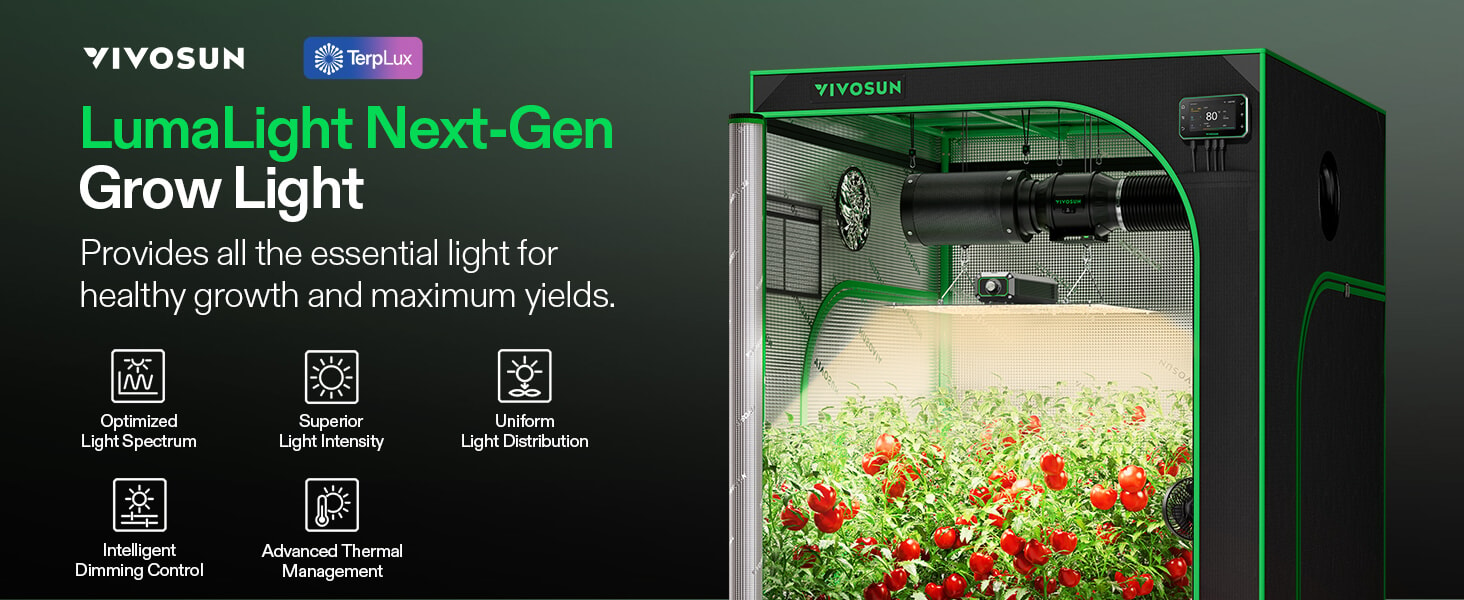
Dimmable bar-and-board panels from 100W to 750W, built around a fixed spectrum of 3000K and 5000K white diodes plus 660nm red and 750nm far-red.
These are the pick for larger tents (up to 5×5 ft) where even corner-to-corner PPFD matters more than tunable spectrum.
LumaRay
Under-canopy and side-lighting bars for taller plants or screen-of-green setups where the main overhead fixture can't reach lower bud sites.
Every current VIVOSUN LED grow light is compatible with the VIVOSUN GrowHub controller and app, letting you automate day/night schedules and adjust intensity remotely instead of relying only on the onboard dimming knob.
Frequently Asked Questions
Are full spectrum LED grow lights better than regular grow lights?
For most home growers, yes — a full spectrum fixture covers seedling through flowering in one light and avoids the yield ceiling that older narrow-spectrum LEDs impose.
Dedicated single-stage or single-crop lighting can outperform it for specialized setups, but that's a smaller use case.
Do full spectrum grow lights work as well as real sunlight?
Not exactly.
They cover the PAR range (400–700nm) that drives photosynthesis, but sunlight includes UV, infrared, and other wavelengths in proportions that shift throughout the day — something a fixed-spectrum indoor fixture can't fully replicate.
What wattage full spectrum LED do I need for a 4×4 grow tent?
Most 4×4 tents perform well with 320–400W, such as the VIVOSUN AeroLight AW400 or LumaLight 320W/400W, depending on whether you want tunable spectrum and a circulation fan (AeroLight) or maximum canopy uniformity (LumaLight).
Can one full spectrum light handle every growth stage?
Yes — that's the main advantage.
The blue-heavy component supports vegetative growth while the red and far-red wavelengths support flowering, so you don't need to switch fixtures between stages.
The Bottom Line
Full spectrum LED grow lights are a genuine upgrade over older single-band fixtures, but they're a tool to match to your plant's needs — not a literal replacement for the sun.
Start with the light intensity and coverage your tent size requires, then decide whether tunable spectrum (AeroLight) or maximum uniformity at higher wattage (LumaLight) fits your setup better.
Have questions about sizing a light to your grow space? Reach out to the VIVOSUN team, and check out our other grow guides for more tips on getting the most out of your indoor garden.